

Why solid surface works for kitchen countertops
- 30 June 2026|
- Blogs|
- Sameer Sawant
When specifying a kitchen worktop, the decision often comes down to balancing cost, appearance and long-term performance. While laminate remains a budget-friendly option and quartz is widely regarded as a premium material, there is another solution that sits comfortably between the two.
For many projects, solid surfaces for kitchen countertops provide the ideal middle ground. They offer a more durable and refined alternative to laminate, while delivering many of the visual qualities associated with quartz without the same premium price tag. Unlike quartz, solid surface can also be repaired if damaged, helping to extend its lifespan without costly replacement or ongoing maintenance.
This makes using solid surface particularly attractive for homeowners, developers and commercial projects where budgets matter, but quality can’t be compromised. And, while an individual homeowner might stretch to quartz as a one-time purchase, for large-scale developments where budgets are tight and every extra pound spent is multiplied across many units, solid surface is perfect.
Why kitchens need the right surface
A kitchen is one of the hardest-working spaces in any property. Worktops are exposed to daily food preparation, moisture, spills, cleaning products and regular wear. Selecting a durable surface that continues to perform for years is therefore essential.
While natural stone countertops such as granite and quartz remain popular choices, they come with a considerably higher purchase cost.
For developers, solid surface worktops provide an attractive compromise. They deliver the seamless look buyers expect while remaining within budget and helping to minimise future warranty claims and replacement costs.
Seamless fabrication creates a cleaner finish
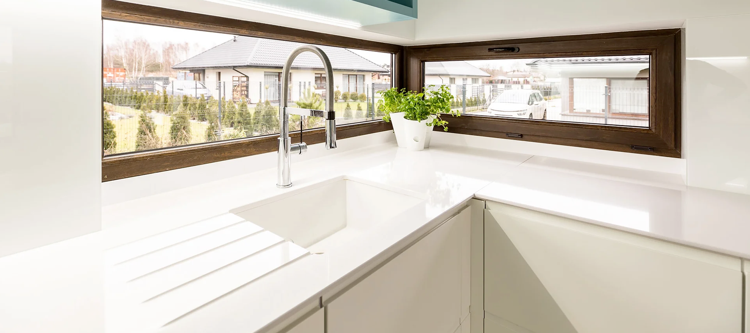
One of the defining characteristics of a solid surface countertop is its seamless design.
Using specialist fabrication techniques, individual solid surface sheets are joined together with invisible seams that create a continuous, smooth surface. Unlike many countertop materials where visible seams can collect dirt and moisture, solid surface produces a seamless appearance that is both practical and visually appealing.
The benefits include:
- Invisible seams that create a continuous finish
- Easier day-to-day cleaning
- Reduced areas where bacteria can accumulate
- Greater design flexibility for bespoke kitchen layouts
Non-porous surfaces support kitchen hygiene
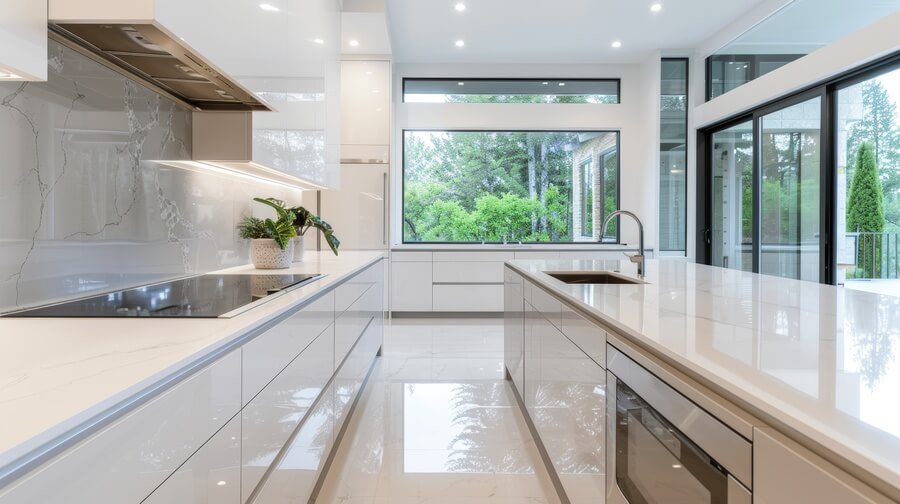
Kitchen worktops need to withstand constant exposure to food preparation, liquids and cleaning products.
Unlike some natural stone materials, solid surface is non-porous. Moisture cannot penetrate the surface, helping to reduce the risk of stains and bacterial growth. This makes it particularly suitable wherever hygiene is a priority.
The smooth surface is simple to clean using everyday household products and does not require sealing throughout its lifespan. By comparison, many natural stone countertops require periodic sealing to maintain their stain resistance.
Built for everyday durability
Kitchen worktops experience constant use, so durability should never be an afterthought.
Solid surface offers excellent resistance to everyday scratches, stains and general wear. Although quartz is harder wearing overall, solid surface has an important advantage if accidental damage does occur.
Minor scratches, marks and burns can often be repaired rather than replacing the entire countertop. This restorative quality helps protect the investment over many years and keeps maintenance costs low, while also providing a long life span to help with sustainability.
For homeowners, this means confidence that the kitchen will continue looking its best. For developers, it supports the long-term performance expected from modern housing schemes.
How does solid surface compare with laminate, quartz and granite?
Each countertop material has strengths depending on the application.
Laminate and wooden worktops offer a low initial purchase cost but is more susceptible to damage, visible wear and replacement over time.
Quartz provides exceptional hardness but commands a significantly higher price. Repairs can also be difficult or expensive if damage occurs.
Granite delivers the appeal of natural stone, although it often requires sealing and ongoing maintenance to protect against stains and moisture.
Solid surface occupies the middle ground by combining a seamless look with invisible seams, excellent stain resistance, low maintenance requirements, repairability if damaged and an attractive appearance at a more accessible price point.
For many residential developments, this combination represents the right choice when balancing budgets with long-term quality.
Suitable for homes and commercial spaces
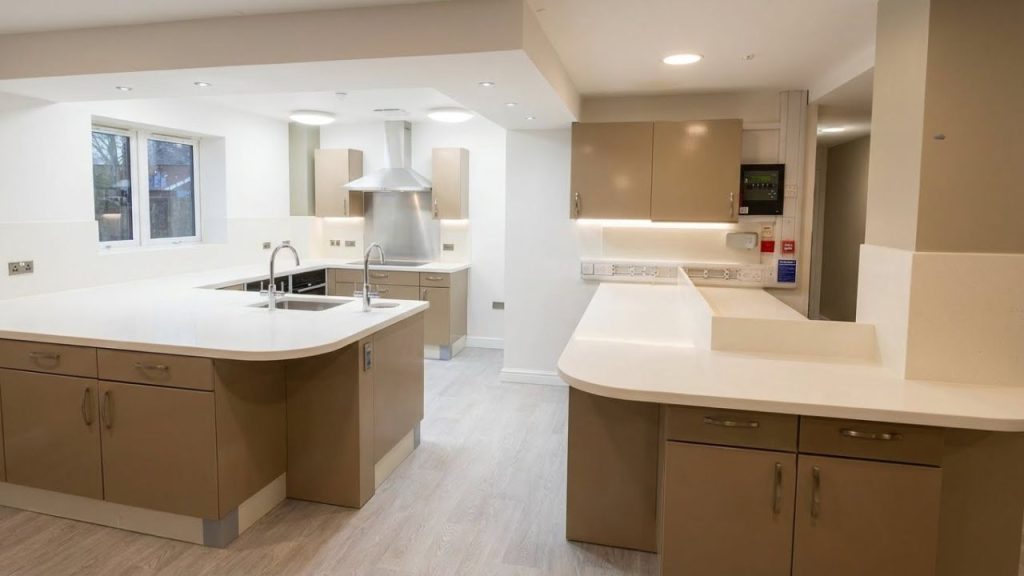
Solid surface options are suitable across a wide variety of kitchen environments.
Within residential properties, they provide attractive worktops that continue performing through years of everyday family life.
Commercial spaces can also benefit from their practical characteristics. Catering facilities, student accommodation, hospitality venues and workplace kitchens require surfaces that are hygienic, durable and easy to maintain. The seamless design and non-porous construction make solid surface particularly well suited to these demanding environments.
Developers also recognise the importance of presentation. Attractive kitchens influence buyers’ first impressions when visiting a showroom or show home. Choosing high-quality worktops contributes to the overall perception of the development without exceeding budget constraints.
High heat resistance and everyday performance
Solid surface offers good heat resistance for normal kitchen use while also resisting many of the scratches and stains associated with everyday cooking.
With routine care, solid surface worktops retain their appearance for many years with very little ongoing maintenance.
Long-term value beyond the initial purchase
The lowest purchase price rarely delivers the lowest lifetime cost. Lower-quality laminate worktops can require replacement far sooner, increasing maintenance costs and creating disruption. At the opposite end of the market, quartz delivers premium performance but often stretches project budgets unnecessarily, particularly for large-scale housing developments.
Solid surface provides long-term value because it combines durability, repairability and attractive aesthetics within a cost-effective solution.
For developers seeking at least ten years of reliable performance and homeowners investing in a kitchen refurbishment, that represents a practical and financially sensible specification.
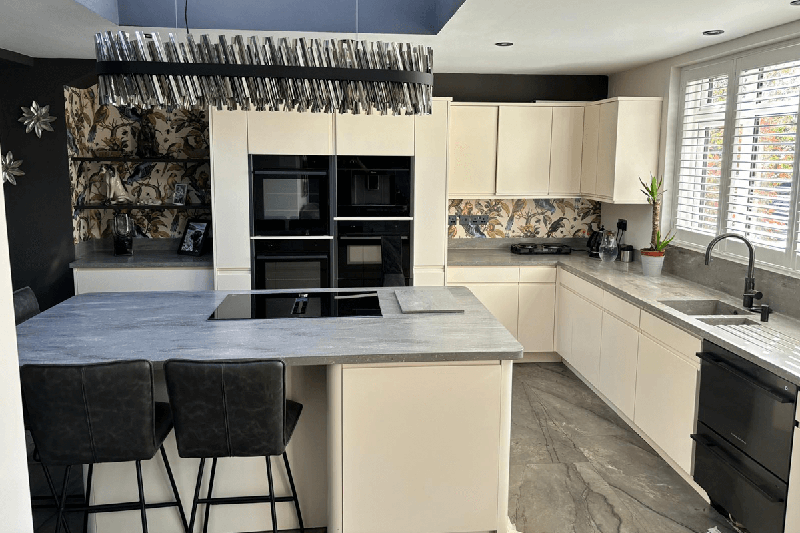
Why choose solid surfaces for kitchen countertops?
Whether designing a bespoke family kitchen for a single home or specifying kitchen worktops across a multi-unit residential development, solid surface delivers on a combination of appearance, hygiene, durability and value that very few materials can match.
Thanks to its manufacturing process and quality control, Velstone is designed to provide long-lasting performance with seamless fabrication, low maintenance requirements and repairable finishes that support years of everyday use.
To discuss your next kitchen project, request a free sample or learn more about Velstone’s range of solid surface worktops, contact the Velstone team today.