

Sustainable surfaces: How repair extends their life
- 10 June 2026|
- Blogs|
- Sameer Sawant
Commercial interiors are under growing pressure to deliver more than appearance alone. Specifiers, contractors and installers are now expected to consider sustainability, long-term performance and whole-life value at every stage of a project. In practice, that means choosing sustainable surfaces that remain serviceable for decades rather than materials that require regular replacement.
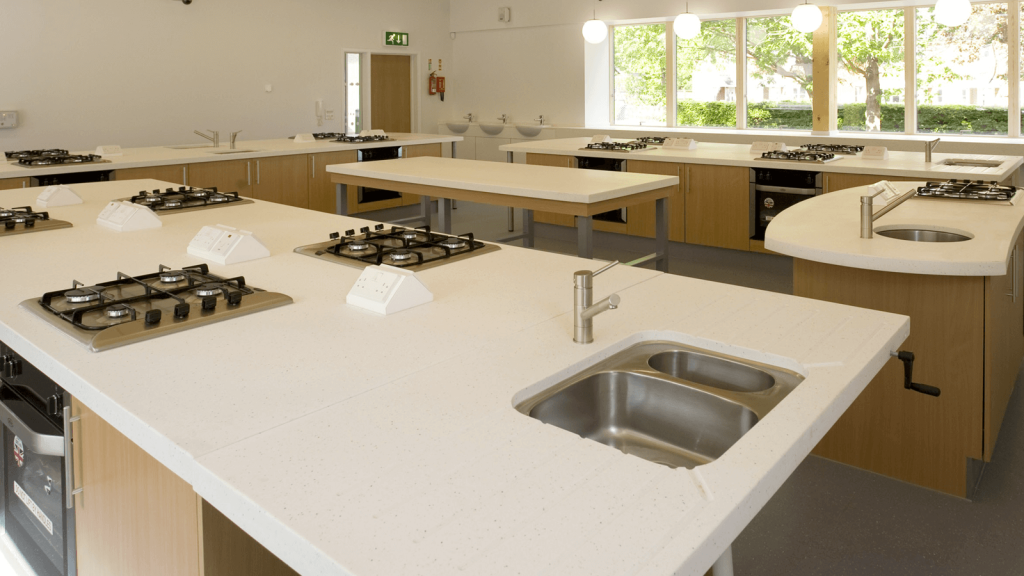
For many commercial environments, replacement cycles are still surprisingly short. In schools, laboratories and washrooms, damaged laminate or chipped tile surfaces are often removed every few years and sent to landfill. This creates unnecessary waste materials, increases carbon emissions and drives up lifecycle costs.
Repairable solid surface materials offer a more responsible alternative. Instead of replacing entire countertops when scratches, burns or stains appear, the surface can be restored on-site and returned to its original finish. This repair-first approach supports sustainable construction by reducing waste, conserving resources and lowering the carbon footprint associated with repeated manufacturing and installation.
Why repairability matters in sustainable surfaces
Many traditional surface materials are difficult or impossible to repair effectively, and a replacement is usually the only option. This creates a hidden sustainability issue.
Repairability changes that equation completely. A renewable solid surface allows installers to restore damage directly on-site using specialist repair techniques. Scratches, burns and staining can often be removed through sanding and refinishing rather than replacing the entire worktop. This delivers several environmental benefits:
- Less material sent to landfill
- Reduced demand for new raw materials
- Lower manufacturing-related carbon emissions
- Fewer transport requirements
- Reduced disruption during refurbishment projects
From a life cycle assessment perspective, extending the usable life of a surface dramatically reduces its environmental impacts per year of use.
What makes Velstone a sustainable surface solution?
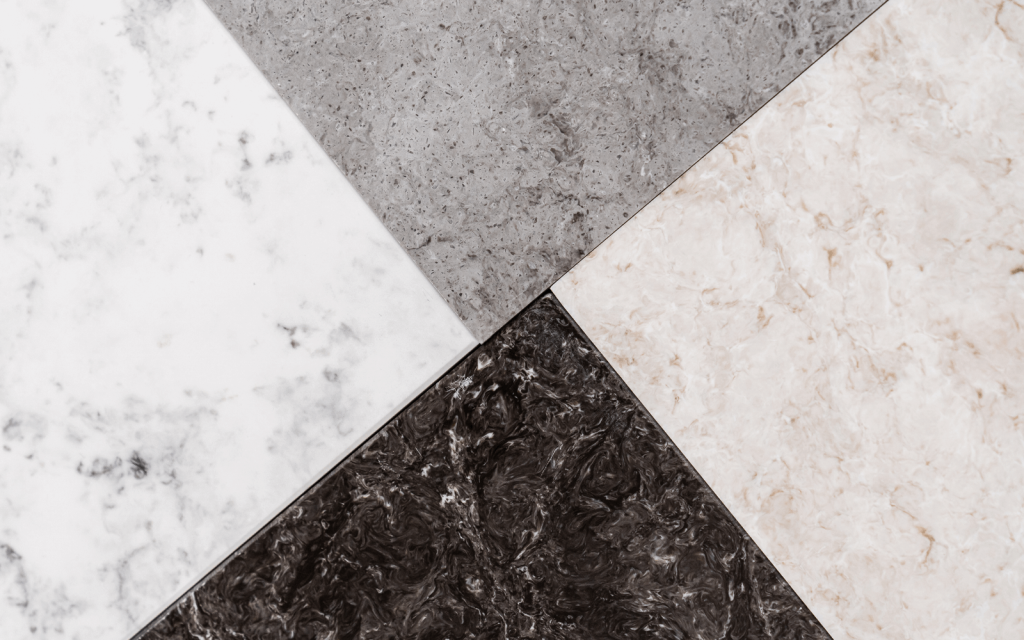
Unlike some surface materials, Velstone’s solid surface product is engineered for longevity. It is robust and strong, and if it is not physically damaged it effectively becomes a product for life. Its durable 25mm construction is fully repairable, highly impact resistant and designed to maintain its appearance for decades in demanding commercial settings.
This durability gives installers and specifiers confidence that the product can continue performing in high-demand commercial environments for many years.
Its repairability is equally important. Affordable repair kits allow damaged areas to be restored without removing the full installation. The surface can be sanded, refinished and reconditioned back to its original appearance.
This capability directly supports sustainable building objectives because it avoids the embedded carbon cost associated with replacement materials.
Why do so many commercial interiors still follow short replacement cycles?
One of the biggest sustainability challenges in commercial design is specifiers and designers’ tendency to take a short-term view and prioritise appearance on day one rather than its performance and appearance many years later.
In education environments, for example, laboratory worktops are often exposed to heavy daily wear from students. Despite this, many facilities still operate on replacement cycles of three to four years using lower-grade materials. That short-term approach creates repeated waste and ongoing costs.
By comparison, a durable solid surface can remain operational for more than 30 years with routine maintenance and occasional repair. The longer lifespan significantly lowers the overall carbon footprint of the installation while reducing future disruption for the client.
Sustainable surfaces and life cycle assessment
Sustainability in commercial interiors increasingly depends on life cycle assessment rather than upfront material cost alone.
A lower-cost surface that requires replacement every few years may initially appear attractive. However, when manufacturing, transport, labour, disposal and replacement materials are considered, the environmental and financial impact becomes far greater over time.
Material comparison for your specification
| Material Type | Estimated Lifespan | Repairable | Maintenance Level |
| Laminate | 3-5 years | No
|
High |
| Quartz | 20+ years*
|
Limited | Requires sealing
|
| Granite
|
10-15 years
|
Limited | Requires sealing |
| Velstone (solid surface) | 20+ years | Yes | Low |
*Quartz has limited and/or expensive repairability options. It is a robust product and offer a long lifespan, unless when damaged its further use can be in jeopardy.
This longer service life is increasingly important within sustainable building projects where clients are monitoring environmental performance across the entire lifespan of the building.
How repair reduces carbon footprint over time
Every replacement worktop carries environmental costs beyond the material itself. The process typically includes:
- Manufacturing new materials
- Packaging and transportation
- Removal and disposal of old surfaces
- Site labour and installation
- Additional downtime and disruption
Each stage contributes to carbon emissions and resource consumption.
Repairing an existing surface avoids much of this impact; because the original countertop remains in place, the project requires fewer new resources and generates far less waste.
For commercial environments with high footfall, this approach can produce a significant impact over the building’s operational lifespan. It also aligns closely with modern sustainable construction principles focused on retention, reuse and material efficiency.
Can sustainable materials still deliver premium aesthetics?
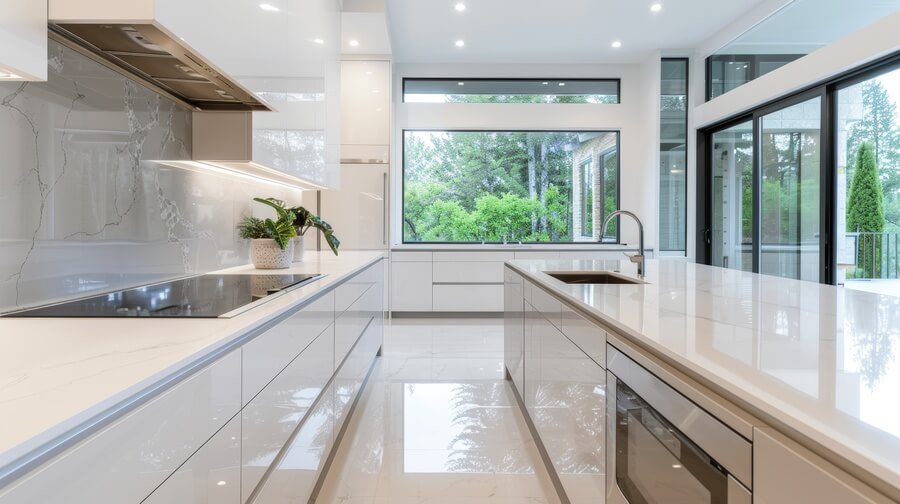
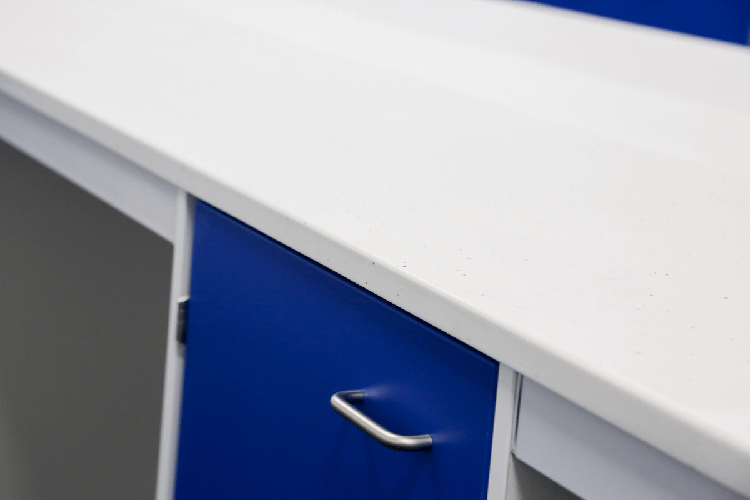
Sustainability no longer requires compromise on appearance. Specifiers increasingly want sustainable building materials that combine durability with a bespoke look suitable for hospitality, healthcare, education and leisure environments. Velstone supports this requirement through a wide range of colours and finishes while maintaining consistent performance characteristics across applications. Solid surface offers:
- Seamless joints
- Non-porous performance
- Consistent appearance
- Easier maintenance
- Repairable finishes
- Long term durability
Sustainable building starts at specification stage
The most effective sustainability decisions are often made long before installation begins. Specifiers who prioritise repairability from the outset can reduce future environmental impacts significantly. Choosing materials that support restoration rather than replacement contributes directly to sustainable building strategies within the construction industry and broader environmental targets.
For installers, repairable surfaces also provide practical site advantages.
Reduced installation waste
Velstone’s factory-prefabricated components help minimise offcuts and reduce waste during installation. This creates cleaner, more efficient projects while supporting sustainable construction goals.
Reduced operational disruption
Because repairs can often be completed on-site, facilities avoid major refurbishment work and extended downtime. This is particularly valuable in healthcare, hospitality and education settings where operational continuity matters.
Long term client value
Clients increasingly recognise the positive impact of specifying sustainable materials that remain functional and visually consistent for decades.
Sustainable surfaces in high-demand commercial environments
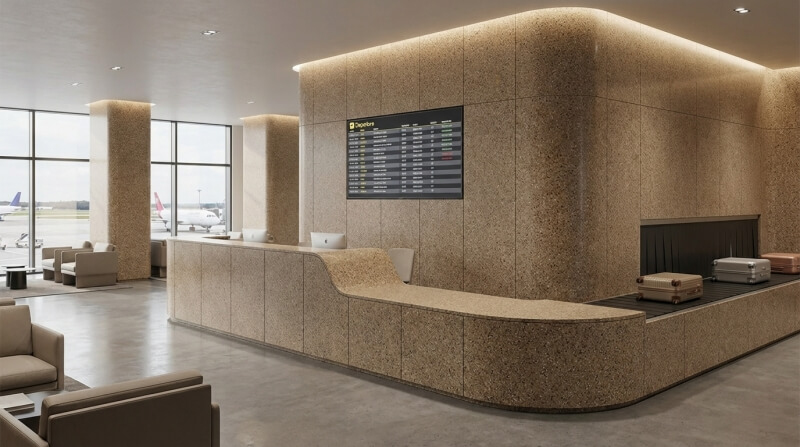
Commercial spaces place considerable pressure on surface materials every day. Hotels, leisure facilities, schools and healthcare environments all require surfaces capable of resisting impact, staining and heavy cleaning regimes. Velstone’s solid surface is designed specifically for these conditions.
Its non-porous structure supports hygiene standards while its repairable finish allows damage to be addressed without complete replacement.
This makes repair-first specification particularly effective in education laboratories, commercial washrooms, healthcare facilities and hospitality areas.
The growing importance of repair-first specification
By extending product lifespan, reducing replacement cycles and conserving resources, sustainable surfaces support practical long term environmental goals across commercial interiors. For installers working within sustainable building projects, selecting materials designed for repair rather than disposal is becoming an increasingly important specification strategy.
Velstone sustainable surface solutions
Velstone supports commercial projects with durable, repairable solid surface solutions designed for long term use. Its renewable surface technology helps reduce waste, lower carbon emissions and minimise replacement cycles across demanding commercial environments.
To explore Velstone’s solid surface applications, discuss your next project or request a free sample, contact the Velstone team. You can explore how to care for solid surface countertops here.