

How Velstone creates your perfect custom colour
- 1 September 2026|
- Blogs|
- Sameer Sawant
Colour is one of the first things a client notices and one of the hardest things to get right across a large project. A worktop that reads slightly warm in one hotel bathroom and slightly cool in another undermines years of brand-building in a single glance.
This is the problem Velstone’s bespoke colour matching solid surface service was built to solve, and it is why architects, designers and specifiers turn to Velstone when a project needs an exact RAL or Dulux match rather than a shade picked from a standard palette.
It’s also why brands including Virgin Atlantic, Holiday Inn, Fairfield by Marriott and the London Lionesses rely on Velstone to match their identity precisely, at every site and on every order.
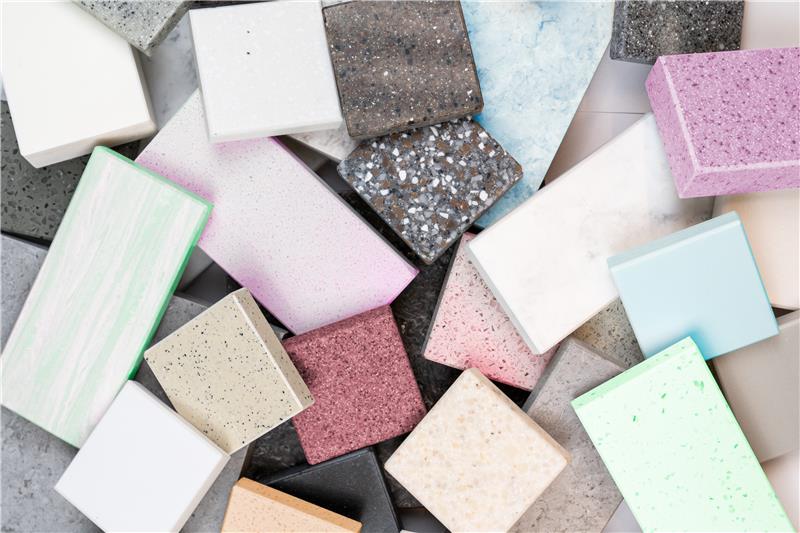
Velstone’s bespoke colour matching solid surface
Velstone provides 30 standard colour offerings. Bespoke colour matching goes a step further. Velstone’s expert team introduces the pigment combination at the casting stage, so the colour runs through the full depth of the sheet.
The colour cannot chip or wear through to reveal a different tone underneath, while scratches can be sanded and polished out because the colour continues through the thickness of the sheet.
Roughly eight out of every 10 custom colour enquiries Velstone receives arrive with a RAL or Dulux reference already attached, usually a precise green, pink or corporate tone rather than a loose description. The remainder tend to come from clients sending a physical sample, perhaps a quartz worktop, a tile or a cabinet block, asking Velstone to match the colour seen on that material.
How does the process work, from enquiry to finished product
Custom colour development is part science and part craft. Velstone’s research and development team relies on a visual, optics-based matching process rather than a purely instrument-driven one, examining solid colours and granite-effect colours side by side against the target reference.
Sharing your colour reference
The process starts with whatever reference the client has to hand: a RAL code, a Dulux reference, or a physical object. The more precise the starting point, the quicker the formulation stage moves.

Formulating the pigment match
Although RAL and Dulux between them offer thousands of shades, pigment suppliers typically only stock around ten pigments that are genuinely relevant to solid surface manufacturing. Velstone’s R&D team selects the closest available pigment and adjusts it towards white or black until the lightness matches the desired colour. Some colours come together within two attempts. Others can take ten, or occasionally fifty, before the formulation is right.
Approving your production sample
Because close colour matches can differ by only a marginal amount, Velstone typically produces three or four close variants of a requested colour so the client can choose the one that suits the space best. A production sample is then made available for approval before manufacturing begins in full.
Delivery of factory-finished sheets
Once approved, sheets arrive factory-finished and ready for an approved fabricator to work with. Velstone recommends fabrication and installation follow its guidelines so performance and durability are not compromised further down the line.
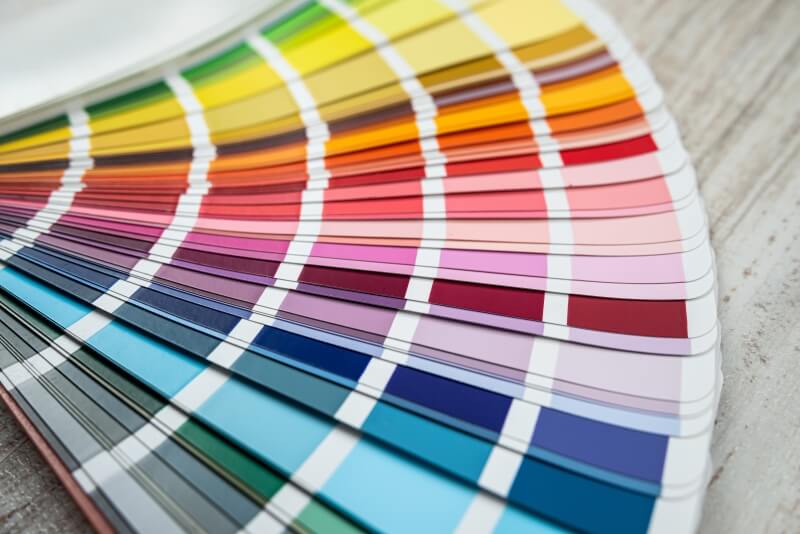
What level of precision can you expect from a RAL or Dulux match
For well-known brands, precision is not negotiable. Companies such as Virgin Atlantic and KFC need their solid surface materials to reproduce their brand colours exactly, because guests recognise a brand partly through the consistency of its physical environment. Residential, hotel developments and stadiums work slightly differently, with the priority being that solid surface countertops, wall panelling and other elements sit together as one coherent design.
In rare cases a client arrives with only a concept, such as a pink terracotta effect, having never seen the colour in a physical material before. Velstone’s team works through sample options with them until the finish matches the design dream they had in mind.
Why does colour accuracy matter for brand consistency
A reception desk in Glasgow should carry the same tone as one in Singapore. Guests may not be able to name what feels wrong when colour drifts between sites, but they notice it all the same. Procurement teams increasingly specify surface colours by code for this reason, rather than trusting a colour name to translate consistently between suppliers.
What lead times can customers expect?
Lead times are part of this conversation too. Other manufacturers are often reluctant to colour match at all unless a client commits to a minimum order quantity more than double Velstone’s requirement, typically 200 to 250 sheets and a 20-week lead time.
Velstone’s minimum order sits under 100 sheets, with production of 10 to 12 weeks, which keeps fabricator stock levels healthy and gives project teams enough time to plan installation without holding excess inventory of a colour they may only need once.
How has bespoke colour matching worked for brands like Virgin Atlantic and Holiday Inn
When Velstone develops a custom colour for a brand, that colour can be held exclusively in stock for the client, ready for repeat orders as new sites open. This is the biggest difference between a manufacturer that treats colour as a one-off job and one that treats it as an ongoing brand asset. Holiday Inn and other hospitality groups rely on this approach to keep their solid surface materials consistent as their estate grows, without resubmitting a full colour brief for every new hotel.
Custom colours across hospitality, healthcare and commercial spaces
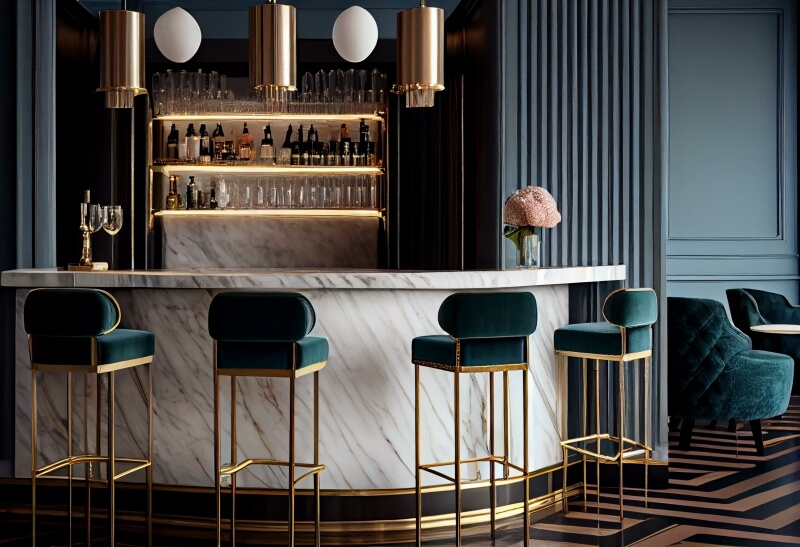
The hospitality arena places some of the heaviest demands on colour matching, balancing group-level brand standards against local design intent and the practical need for materials that housekeeping teams can clean and repair without specialist tools. Hotel surfaces such as bathroom vanity tops, cistern panels and splashbacks can all be produced in the same matched colour, giving the flow of the material a continuous, seamless appearance across a room.
Solid surface’s non-porous, seamless joints make it equally suited to healthcare settings, where colour coding is often used for wayfinding, and to laboratory worktops that need to withstand daily use as much as they need to look right.
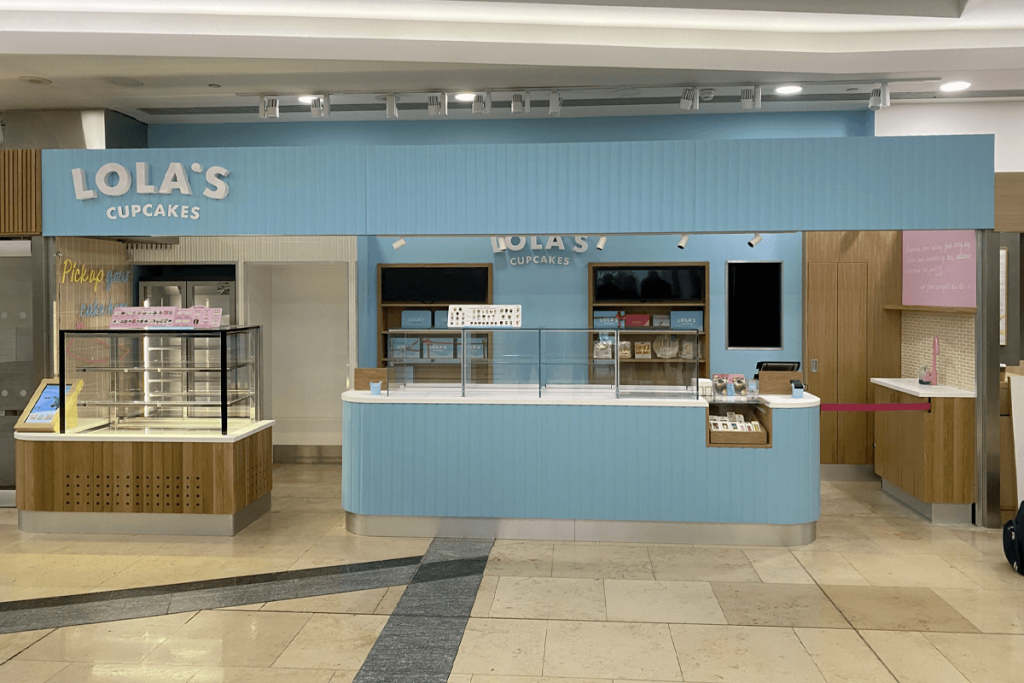
Custom colour is not limited to any one application. Kitchen worktops, commercial washrooms, bbq kitchen areas and a bespoke commercial counter for a hotel lobby can all be produced in the same matched shade, giving specifiers limitless design possibilities across a diverse range of settings.
What should specifiers know before choosing a custom colour
There are not many genuine misconceptions about custom colour, but a few practical points are worth raising early. Dark colours, along with some shades of orange and black, tend to show scratches more visibly than lighter tones, something Velstone flags to clients before an order is placed rather than after installation. It is also easy for a design team to focus on one particular shade and lose sight of the production time, price and minimum order quantity attached to it, so raising these questions at enquiry stage avoids delays for the end client.
Anyone comparing brands of solid surface for a colour-critical project should ask directly about minimum order quantity (MOQ), lead times and whether a colour can be held exclusively once developed. These questions reveal the real advantage of solid surface fabrication over a standard palette, and whether a supplier is set up to support a single installation or an entire rollout.
Why choose Velstone for your next colour-critical project
Velstone has supplied durable products to architects, designers and specifiers across the UK and Europe for more than three decades, working across commercial properties, hospitality, healthcare and education.
If you are planning a project that needs a colour no standard palette can offer or want to keep an existing brand colour consistent across new sites, get in touch with Velstone to discuss a bespoke colour match or request a free sample.
The complete specifier’s guide to high-performance solid surfaces covers the wider specification considerations for large projects, including thickness selection, finish choices and installation guidance.